


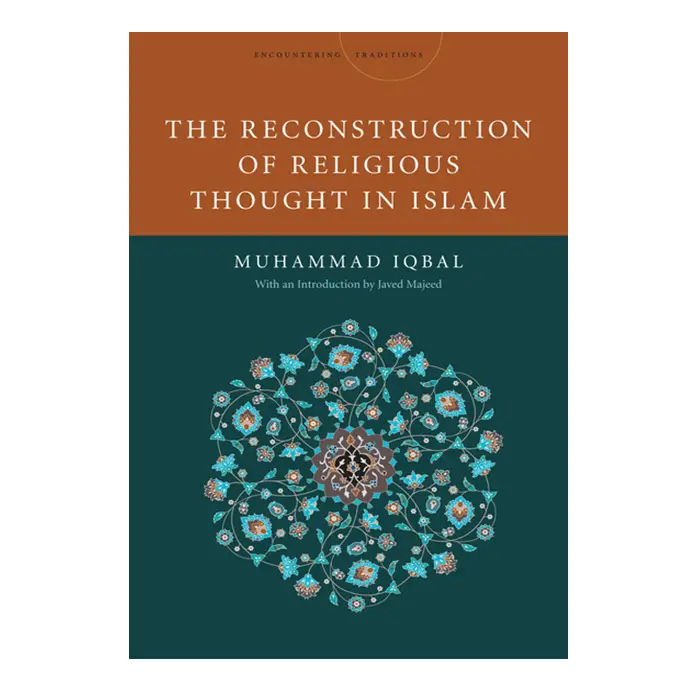
Description
The Reconstruction of Religious Thought in Islam By Allama Iqbal
Allama Iqbal presents a bold philosophical project addressing modernity and faith. The book explores reason, revelation, and experience within Islamic thought. Moreover, it argues for intellectual renewal grounded in tradition. Consequently, readers find a framework for dynamic religious understanding.
Historical Context and Purpose
First, Iqbal engages Western philosophy with Islamic metaphysics. Then, he critiques stagnation within religious scholarship.
Additionally, he responds to colonial modernity and scientific change. Therefore, the work seeks harmony between faith and progress.
Core Philosophical Arguments
Notably, Iqbal emphasizes khudi, or creative selfhood. Furthermore, he reinterprets ijtihad as a continuous intellectual effort.
Likewise, he values intuition alongside rational inquiry. Hence, religion becomes a living, evolving force. Meanwhile, he challenges determinism through moral freedom.
Structure and Method
Initially, the lectures address knowledge and religious experience. Subsequently, they analyze metaphysics, time, and immortality.
Afterward, political and legal implications appear. Finally, the book proposes reconstruction through disciplined reasoning.
Relevance for Contemporary Readers
Today, the text informs debates on reform and authenticity. Similarly, it guides scholars navigating science and spirituality.
Thus, students gain tools for critical engagement. Ultimately, the book inspires confident, thoughtful faith.
Important Features
-
Clear engagement with Western philosophers, including Bergson and Kant.
-
Emphasis on ijtihad as a creative, ongoing duty.
-
Integration of science, philosophy, and revelation.
-
Focus on moral agency and freedom.
-
Vision for social and legal renewal.
-
Lectures rooted in Quranic principles.
Conclusion
In conclusion, Iqbal offers a constructive vision for Islamic thought. Therefore, the book remains essential for reform-minded readers.
Moreover, it balances tradition with innovation. Consequently, it endures as a landmark in modern Islamic philosophy.




Reviews
There are no reviews yet.