


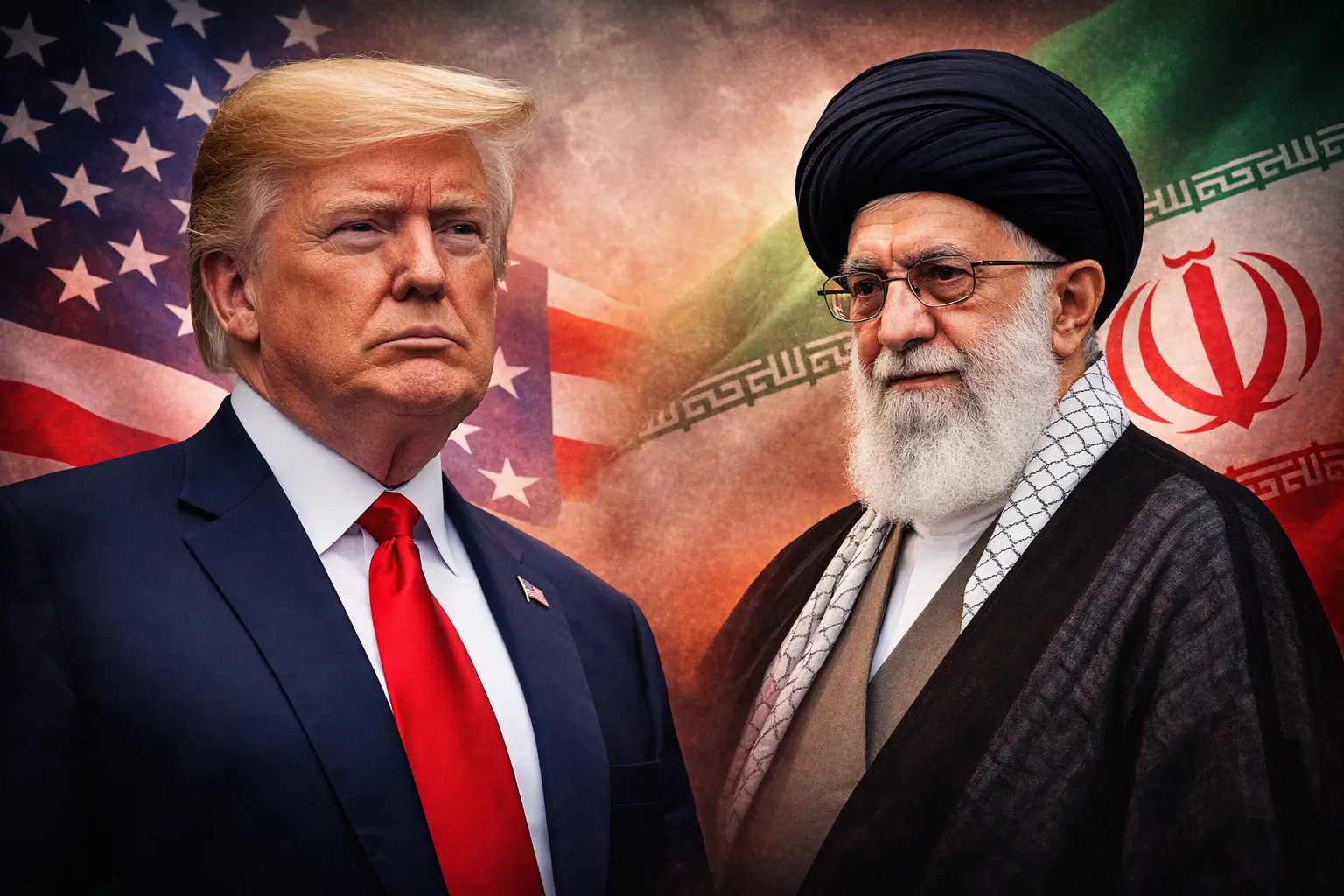
Iran’s Nuclear Future: Why the Next Deal Must Go Further Than the JCPOA. In light of the broader Western worries about Iran, which still include issues such as terrorism and regional aggression as well as domestic repression, negotiators have to focus on defining very strict nuclear terms. Nevertheless, the fundamental issue is nuclear capability. What nuclear terms can ensure that the next JCPOA won't be another failure and prevent Iran from weaponizing in the long run?
More than two decades ago, diplomats set a goal of preventing Iran from obtaining a nuclear weapon. This goal remains valid. Meanwhile, Iran’s technical developments have brought significant changes to the overall situation. For instance, the fact that Israel can be targeted directly with ballistic missiles aimed at civilians illustrates clear operational intent. It follows that the missile program is directly tied to the nuclear program. Moreover, it is no longer a mere theoretical concept. Rather, it has become a means of intimidation.
As a result, any nuclear deal should go beyond simply postponing the uranium enrichment. It should prevent the so-called “breakout” in the short term forever. Besides, it should limit the connection between nuclear and missile programs. Only structural constraints can do that.
The Objectives and Scope of Negotiations
The main point of divergence in the United States between hawks and doves is what should the talks be about. Should these talks become strictly about the nuclear program? Or should they be expanded also to include the missile program and proxies? That question is a problem either way: on the one hand, Tehran would be unwilling to accept sweeping restrictions; on the other hand, the neglect of these issues would be a strategic mistake.
In an attempt not to trample on wider disputes that these issues raise, the following proposals have been created for the nuclear issue only. They, however, include some missile provisions related to the weapon delivery integration. Generally speaking, rapid breakout ability must be eliminated, and durable structural limits must be imposed. Besides that, they also have to allow for intrusive verification. Iran’s Nuclear Future: Why the Next Deal Must Go Further Than the JCPOA
On top of that, the parties should agree on nuclear power for peaceful uses only by completely ruling out any avenue from civilian to military potential. The past offers a very clear example. There is simply no justification for leniency. The timetables that seemed long at an earlier stage were actually very short from the strategic perspective.
For example, the 2015 JCPOA had the non-proliferation restrictions for quite an extended period. Nevertheless, the changes in U.S. administrations resulted in policy weakening. Besides that, the opponents of that agreement argued that the duration of the sunset clauses was too short from the very beginning.
Whatever the case, Iran retained its most important skills and upgraded its centrifuges technology. That way, it kept the possibilities of a breakout unchanged. Whilst, U.S. and Israeli airstrikes inflicted damages to the Iranian nuclear facilities. However, those acts were only able to somewhat slow down the program. At the same time, Europe’s reluctance in relation to certain sanctions diminished the effect of the leverage. Thus, the UN sanctions gradually became irrelevant. In light of that, the future deal must be based on structural prevention. It should not rely on optional enforcement. Neither should it assume regime moderation.
The next nuclear deal should be about.
Much longer time horizon: The JCPOA roadmap was meant to eventually lead to nuclear industry development capability. It was widely regarded as premature by many observers. Thus, any new deal should have a duration significantly longer than that. Therefore, it should be a time frame of no less than fifty years. In addition to that, it must not include short sunset clauses. If such clauses are included, then Tehran will probably be able to restore its legitimacy in under a decade.
Ban on advanced centrifuges: Iran’s work on advanced centrifuges was the main reason why it was able to shorten the time required for breakout. Therefore, a comprehensive prohibition must be imposed by the negotiators. Such a prohibition should not only cover the manufacture and running but also the retaining of the machines. To be more precise, the ban has to include the IR-2, IR-4, IR-6, and IR-8 models.
Dismantling of related infrastructure: in addition to the production facilities, the procurement networks must also be covered. And these measures must be applicable at any time within the agreed timeframe.
Also, the prohibition must include universities and research institutions. Otherwise, the potential for hidden capacity could remain. Verification methods should ensure compliance with this requirement.
Out of the question or minimal enrichment plus no accumulation of enriched material. Iran’s Nuclear Future: Why the Next Deal Must Go Further Than the JCPOA
In a perfect world, Iran wouldn't do any enrichment at all domestically. Instead, international suppliers would send the required fuel for civilian use. Politically, however, such a scenario might be very complicated. If this is the case, the level of enrichment shouldn't be higher than absolutely necessary. It should be continuously supervised.
Besides that, stockpiles must remain significantly lower than the level at which a country could carry out a nuclear breakout. Any surplus material has to be taken out of the country. The limits should be very clearly decided by technical teams. For more detailed terminology, see The Washington Institute's Iran Nuclear Glossary.
Shutdown of the most vital installations.
There are some facilities that completely negate the possibility of a breakout-proof system. Thus, the parties involved in the negotiations should agree on the permanent disabling of those facilities. This condition covers also deeply buried ones. Experts should set the standards for how deep the sites could be. Later, permanent dismantlement and sealing have to follow.
A strict and highly detailed verification method.
Verification has to go beyond the usual arms-control agreements and standards. It must be close to the extremely transparent counter-proliferation measures. Practically, the IAEA should be able to observe the nuclear-related activities without break. In addition, inspectors should also keep an eye on educational facilities.
Besides that, they should follow scientists and track supply chains. Prefacing it all with continuous, intrusive verification regime levels
Inspectors must be given the freedom to enter centrifuge facilities anytime. They should be able to do so without any prior notice when deemed essential. They are permitted, of course, to carry out interviews and other interactions with the personnel.
They must also be allowed to attend any such meetings without the workers even knowing beforehand. Digital remote monitoring should eventually become a standard feature of surveillance.
Most of these components were included in the JCPOA. On the other hand, two clauses need to be emphasized especially. Firstly, inspectors should be granted the right to access the site(s) without any advance notice. Secondly, in order to perform real-time monitoring, IAEA personnel based in foreign countries would have to be involved. At that time, in 2015, Tehran was opposed to these two measures.
There can be no coordination at all between the work on missiles and the nuclear program. The deal that is aimed at being ‘breakout-proof' has to take care of the integration risks from the very beginning. It must forbid the experiments on warheads. Besides, there should be a prohibition on
hydrodynamic simulations. Work involving modeling nuclear weapons has to be stopped. Some of the dual-use goods that facilitate weaponization should not be allowed to be acquired by Iran
(for more information, refer to Sections 5 and 6 of Nuclear Suppliers Group guidelines which also provide definitions). Furthermore, the ICBM development must be banned by the negotiators. It is a capability that causes a threat to the security of the U.S. and European regions. Without any restrictions, Iran could achieve it within a few years.
To sanction actions that violate human rights and support of terrorism, focus on the nuclear issue only gives no relief. Iran’s Nuclear Future: Why the Next Deal Must Go Further Than the JCPOA
Once the nuclear issue has been satisfactorily resolved, the removal of sanctions can go hand in hand with the performance of the actions being verified. The opening up of the economy in terms of the satisfaction of a certain degree of requirements must take place step by step. If the sanctions imposed on such organizations as the Revolutionary Guard Corps were to be removed broadly, that would lead to the undermining of the leverage.
For this reason, the parties to the negotiations must refrain from making such steps if the dismantling has not been demonstrated.
By the same token, the levels at which energy exports are allowed should always be agreed upon, conditional on the progress that has been made. The increase, if any, should come after the progress that has been verified. The access to Western banking including SWIFT has to be kept limited. Iran’s Nuclear Future: Why the Next Deal Must Go Further Than the JCPOA
It also has to be able to be reversed.
Also, if the negotiations are solely about nuclear issues, the easing of sanctions should be limited to that sphere only.
The other sanctions for terrorism and human rights violations should remain in place. So, foreign banks would be rather cautious in their dealings. Iranian officials should be quite clear about these limits.
Viability versus Strategic Sufficiency
This is a very broad scheme that depicts the different components that the strategic headquarters needs. It is not a forecast of Tehran's willingness to come up with a compromise.
While weaker arrangements can still be used to delay a nuclear breakout, they will not be sufficient to prevent it from happening eventually.
Hence, it is crucial that negotiators evaluate their success only on the basis of the structural outcome. Optics and a temporary state of calm are not a good criterion, possession, or definition of a deal that is considered ‘good'. Instead, it is the element of permanence that comes into play here.
In fact, the putative agreement had to be one that did not allow the capacity to switch back very quickly or rapidly. In addition, it has to disallow the kind of missile activities that could be used as a coercive nuclear threat. Otherwise, integration risks would continue to exist.
Furthermore, by coming up with the inadequate negotiation, Iran gets more time and legitimacy. Besides, this way, Iran would also be allowed to keep up with technological advancements. Eventually, such a path of technology and progress could be turned to a military nuclear capability level. Iran’s Nuclear Future: Why the Next Deal Must Go Further Than the JCPOA
CSS Forum – Join Now
