


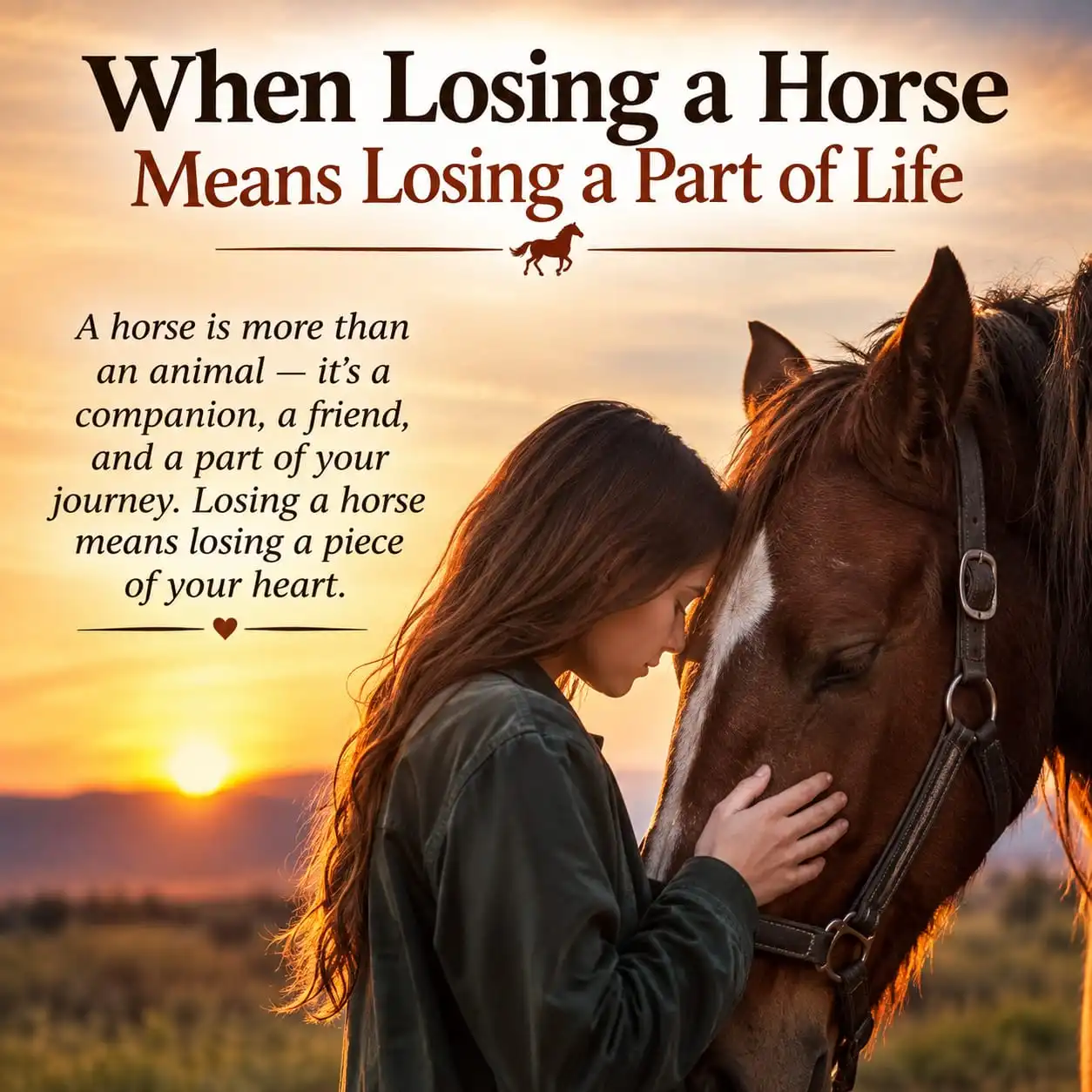
When Losing a Horse Means Losing a Part of Life
When Losing a Horse Means Losing a Part of Life In Pakistan, the newspapers in English are mostly read in big cities. Even the people living in cities, quite commonly, only read the headlines. These days, much of the news is bleak, and it is hard to find genuine reasons for hope. Hence, it is perfectly understandable many people do not read much even after those headlines.
A story that came out a few days ago, from a small village, was one about a man and his horse. Mukhtar, a 45-year-old, grazed his cattle in the nearby land area which was under the jurisdiction of Yousufwala police station in Sahiwal, according to the report. He spent his whole life with his animals, among which there was a mare who was very dear and special to him. Those of us who never imagine a life without the company of people, noise of cars, Wi-Fi connections and constant city demands probably, find it impossible to think someone living such a lifestyle.
The peacefulness of Mukhtar’s life was broken when his relatives asked the mare to be divided up among them. Even though Mukhtar refused, his parents surrendered the animal. In deep grief, Mukhtar jumped up on a power pole and caught hold of the live wires until he died immediately. His family, who had caused his emotional breakdown, was against autopsying the body. No one knows where the mare is now.
Urban dwellers who come across a report like theirs, however shocking it may be, are likely to brand it as a typical case of country backwardness. They may not understand how someone could be so attached to an animal to decide to lose one’s life over it. To people whose encounters with animals rarely go beyond watching crows, strays, and other unwanted animals living in the Pakistani streets, this type of emotion could be totally unimaginable. Nevertheless, their conclusion could be wrong. Mukhtar’s death was a great loss no matter what the reason for it, but it being a result of his loss of the horse does not deserve a scornful or contemptuous attitude. On the contrary, it should prompt us to think about how incredibly deep and complex the relationship between man and other creatures can get. One of the outcomes of living in cities is that we have been slowly forgetting, through our everyday city lifestyle, such connections with the non-human world around us while we continue to live in an urban environment. When Losing a Horse Means Losing a Part of Life
Horses are one of the animal species that have accompanied human beings for so many thousands of years that their importance has been a constant. It is believed that humans initiated the taming of these animals thousands of years ago. The first to domesticate horses were the people living in the grasslands of Eurasia which today covers a big part of Kazakhstan. They began the process of domesticating the horse which is still going on today. Nearly all modern domesticated horses including the mare whose death immediately followed Mukhtar's death, come from a strain of horse dating back 4000 years in the Volga-Don region. The taming and training of the horse led to great changes in the way human beings lived since it made long-distance travel possible and supported new forms of settlement. For a significant majority of mankind horses have been the main and most reliable means of transport and they have made their way deep into human culture.
They have significance which exceeds just utility. Horses are exceptional not only because of their intelligence but also because they can detect and react according to human feelings. We are so much involved with language and human communication that we are almost entirely dependent on it to tell others how we feel, what we want, what is causing us fear or what is our dream. I do believe very much in the power of words but I also think that verbal communication may prevent noticing the numerous forms of non-verbal information and expressions which we get all the time.
It could easily be argued that horses were one of the species which were at great risk of misunderstanding by man as they are capable of being very silent and they do not use verbal language. However, recent research shows the opposite of this as scientists are reporting new discoveries about how horses read human minds. In one case a study found that the horse has the ability to tell apart the images of a man looking at the same time angry from and a man smiling. The angry picture brought about more signs of the horse being afraid. Another study said that a horse might remember the person's emotional state after only a short interaction.
Therefore, it is possible for horses to form strong emotional connections with the people who take care of them. The term “emotional contagion” or “synchrony” refers to a condition of horses mimicking the emotional states of those handling them. A handler’s joy might lead a horse to share that emotion; the same goes to the handler having anxiety and the horse mirroring the stress. All in all, this means one of the things is that horse can feel really good by being human around them if they are taken good care of by a person.
The death of Mukhtar in Yousafwala is truly a tragic thing but what made him reach his current position could be somewhat understandable. There is no need to think animals do not feel for they also have feelings so we tend to forget that. It is a pity that we are not even thinking about a dog or a cat as having feelings but only humans are allowed to have these kinds of emotions or feelings in their case a horse. Mukhtar would have known this through his own horse caring adventures because it is not difficult at all to find evidence that these animals are not dumb, not inconsiderate and have emotions.
It is really quite easy for people to belittle country folk and at the same time disregard the feelings of animals. However it is not really the animals and humans who are getting judged so much as it is our own limitations that we expose in such thinking and behavior.
CSS Forum – Join Now