


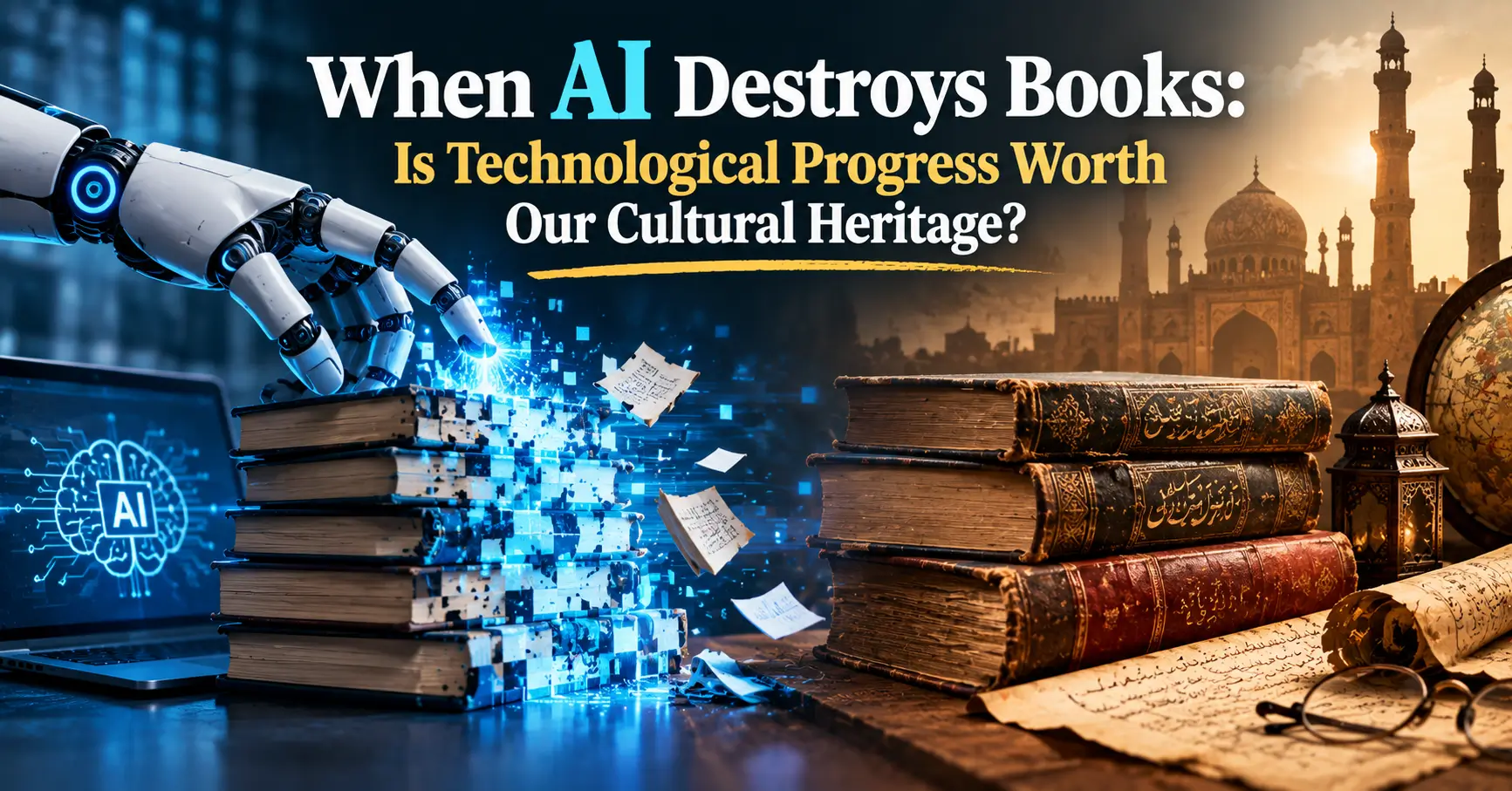
When AI Destroys Books: Is Technological Progress Worth Our Cultural Heritage?
When AI Destroys Books: Is Technological Progress Worth Our Cultural Heritage? Perhaps I’m simply one of those old-fashioned people who still value books in their physical form. I never saw much reason to buy a Kindle or another device designed specifically for reading. For me, reading means holding a book, turning its pages and enjoying its familiar smell. That’s probably why libraries and bookstores have always felt so welcoming. I grew up in a family that deeply respected the written word, regardless of where it appeared. In fact, placing a newspaper on the floor was considered deeply disrespectful and contrary to the values of learning.
When Books Become AI Data
The idea of using physical books as training material for AI may sound extreme, yet it has become increasingly common. According to newspaper reports, civil society investigations and legal documents, companies such as Anthropic, through Project Panama, have acquired large numbers of old and rare books to train their LLMs. When AI Destroys Books: Is Technological Progress Worth Our Cultural Heritage?
The reported process involves dismantling the books, removing their pages and running those pages through high-resolution automated scanners. Afterwards, companies recycle the paper. However, responsible recycling does not erase the fact that the original books no longer exist.
Important concerns include:
- Destruction of physical books
- Loss of rare and potentially irreplaceable works
- Copyright and authors’ rights
- Preservation of cultural heritage
- Ethical limits of AI development
- Protection of historical knowledge
Does Legality Make It Right?
AI companies have already faced copyright lawsuits over the large-scale copying of books without authors’ permission. Although some may argue that purchasing and scanning books falls within the law, legality alone does not settle the ethical question. History offers many examples of actions that remained legal while causing serious harm. Similarly, environmental damage can occur when laws provide inadequate protection, yet legal permission does not automatically make such conduct morally acceptable. When AI Destroys Books: Is Technological Progress Worth Our Cultural Heritage?
What Could We Lose?
A seemingly forgotten book may contain knowledge that future generations desperately need. For example, it could preserve the only surviving record of a disappearing language or document ideas from an otherwise overlooked period. When AI Destroys Books: Is Technological Progress Worth Our Cultural Heritage?
Furthermore, society protects paintings and sculptures as cultural heritage even when few people admire them. Books deserve the same consideration. If we would object to destroying centuries-old paintings simply because they attract little attention, we should also question the destruction of rare books for AI training.
The Cost of AI Progress
Anthropic’s reported internal documents surrounding Project Panama have intensified these concerns. The phrase “destructively scan all the books in the world” raises serious questions for anyone concerned with literature, culture and historical preservation.
Ultimately, we must ask whether increasingly powerful AI models justify sacrificing irreplaceable cultural resources. Moreover, what happens if this enormous effort fails to produce significantly better models? In that case, the destruction may prove both unnecessary and irreversible.
Technology can move forward. Nevertheless, progress should not require us to erase the past. The real challenge is finding ways to advance AI while preserving the books, knowledge and cultural heritage that future generations may need.
CSS Forum – Join Now