


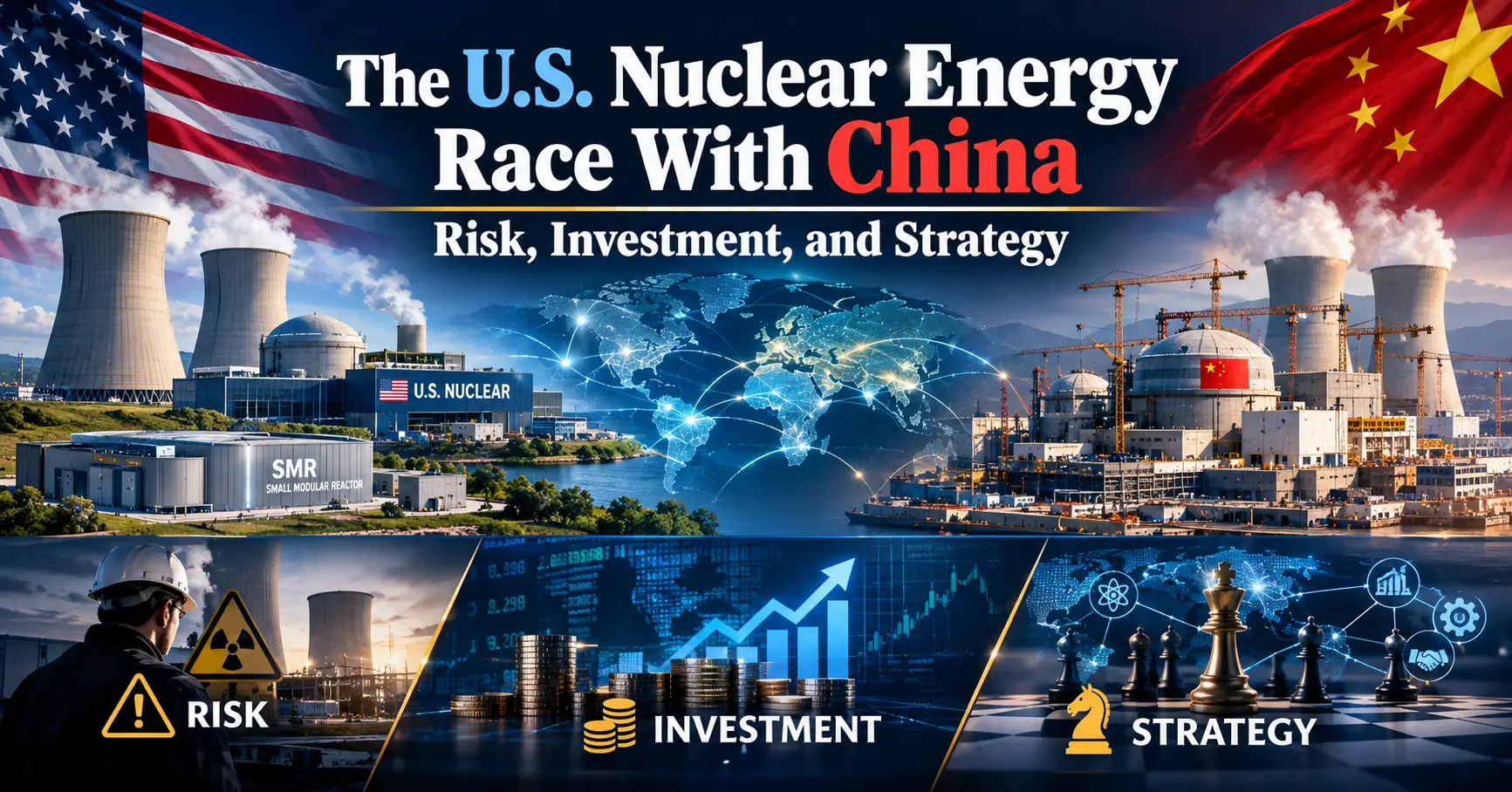
The U.S. Nuclear Energy Race With China
The United States and China face growing strategic competition over leadership in nuclear energy. China has accelerated nuclear development through centralized planning, standardized reactor designs, coordinated financing, and strong supply chains. The United States has major advantages in technology, skilled workers, financial markets, and private investment, but project uncertainty can limit their impact.
Why Nuclear Projects Face High Risks
Nuclear projects require billions of dollars before they generate revenue. Developers often spend years on site studies, engineering, licensing, environmental reviews, and construction planning. Regulatory delays can increase financing costs and weaken project economics.
Supply-chain and construction challenges create additional pressure. Nuclear plants require specialized equipment, qualified workers, experienced contractors, and reliable suppliers. Delays in one area can affect the entire project schedule.
Market conditions also influence investment decisions. Electricity prices, interest rates, long-term power agreements, and construction costs can change project returns. As uncertainty increases, investors demand higher returns, which can make financing more difficult.
How the United States Can Reduce Project Risk
The US government can reduce these challenges without replacing private developers. Federal and state authorities can prepare potential sites, improve transmission connections, assess water and transportation needs, and establish clearer regulatory pathways before construction begins.
Building a Strong Nuclear Ecosystem
Government agencies can also coordinate workforce development, supplier capacity, infrastructure, and regional institutions around future nuclear projects. Community colleges and training centers can prepare workers, while manufacturers can invest in specialized equipment when they see sustained demand. The U.S. Nuclear Energy Race With China
Financial tools can further support private investment. Loan guarantees, tax incentives, long-term power agreements, and milestone-based grants can reduce financing and market risks. These measures should encourage private participation rather than remove private responsibility.
Creating a Predictable Project Pipeline
The United States can also create a long-term pipeline of nuclear projects. Standardized procedures and coordinated infrastructure investment can give suppliers and contractors greater confidence. When companies expect multiple projects, they can invest in equipment, workers, and production capacity.
Important Features
- Explains the US-China nuclear energy competition
- Examines regulatory and development risks
- Highlights construction and supply-chain challenges
- Explores market and financing risks
- Discusses the role of private capital
- Explains government-backed risk reduction
- Focuses on workforce and supplier development
- Promotes a predictable nuclear project pipeline
- Compares US strengths with China’s centralized approach
Conclusion
The United States does not need to copy China’s centralized model. Instead, it can use government coordination to reduce project risk and allow private capital to play a larger role. By improving regulation, infrastructure, workforce development, financing, and project coordination, the United States can build a stronger nuclear ecosystem and compete more effectively with China. The U.S. Nuclear Energy Race With China
CSS Forum – Join Now