

Administrative Reform Debate as a Catalyst for Political Crisis
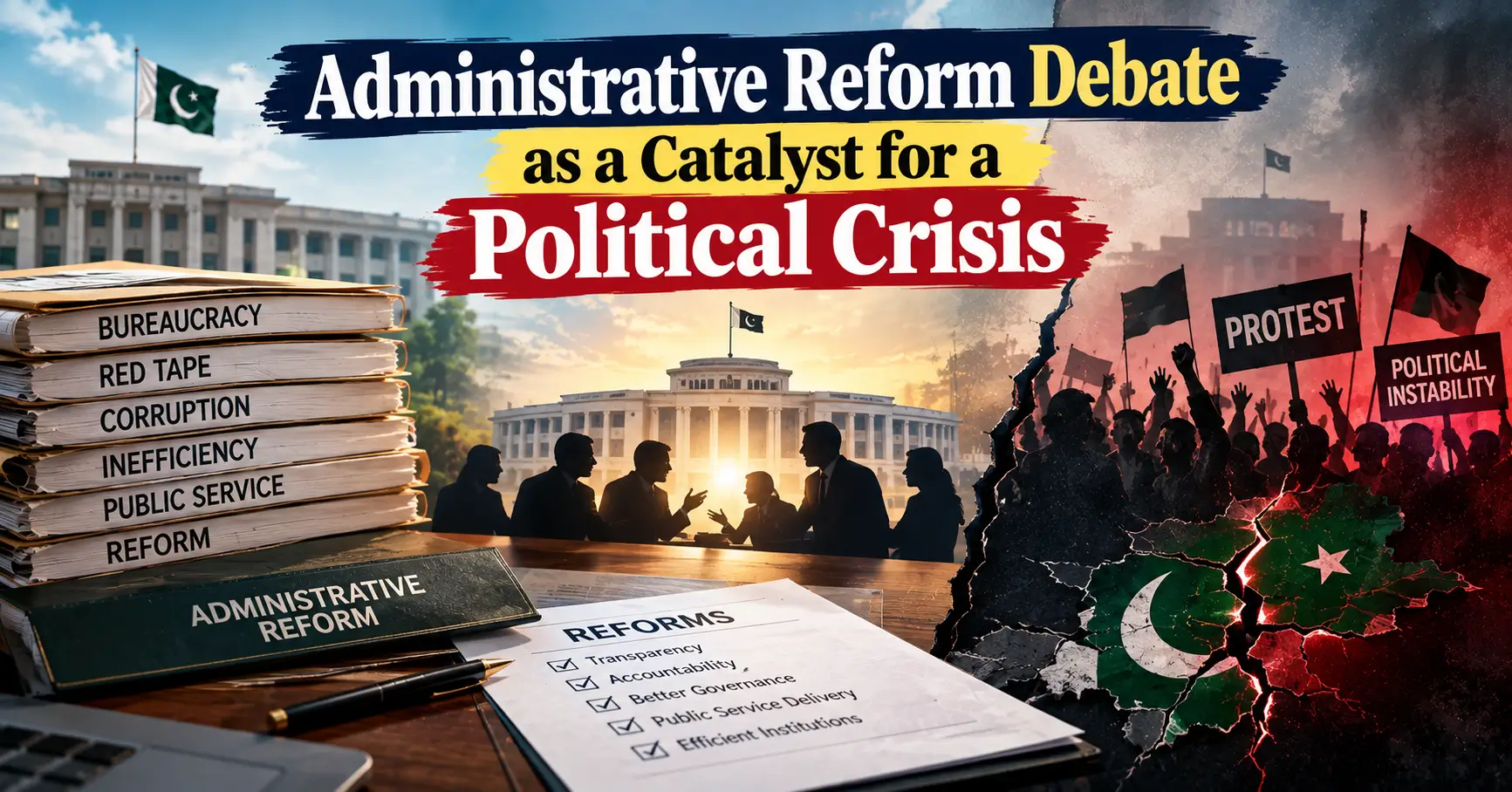
Administrative Reform Debate as a Catalyst for a Political Crisis Pakistan’s proposed administrative overhaul has triggered a major political uproar. Interior Minister Mohsin Naqvi publicly supports creating new administrative units and argues that the country needs them. At the same time, his remarks suggest that influential forces outside the civilian government support the proposal. Furthermore, Naqvi’s reference to a possible referendum has introduced another element of uncertainty into an already complicated situation.
Naqvi already holds several significant responsibilities, including overseeing internal security, managing cricket affairs, and handling occasional diplomatic matters. However, this latest political assignment could prove far more difficult. Meanwhile, the government has yet to explain the proposed administrative framework in detail. As a result, speculation continues to grow, and political tensions are rising.
Breaking of the Ruling Coalition
The proposal has already created divisions within the ruling coalition. In particular, the PPP strongly opposes using administrative reform as a pretext to divide Sindh. Moreover, the Sindh Assembly has passed a resolution against the proposal, clearly demonstrating the intensity of provincial opposition.
Meanwhile, the PML-N has failed to present a unified position. Although some members appear ready to support administrative restructuring, the party’s senior leadership has remained largely silent. More importantly, dividing Punjab would pose a serious political challenge because Punjab remains the PML-N’s main power base. Administrative Reform Debate as a Catalyst for a Political Crisis
Resistance to the Proposal
The PTI may support administrative arrangements that improve governance in principle. Nevertheless, it rejects any plan that authorities impose without political consensus. Furthermore, the Constitution requires a two-thirds majority in parliament and the provincial assemblies for major changes. Therefore, PPP opposition could make parliamentary approval extremely difficult.
The essential points in the matter:
- Creation of new administrative territories
- Possible division of existing provinces
- PPP opposition to dividing Sindh
- Internal disagreements within the PML-N
- PTI resistance to an imposed arrangement
- The possible use of a referendum
- Constitutional requirements for major changes
- Concerns about the establishment’s growing political role
Better Democracy Is the Ultimate Aim
The referendum proposal remains highly controversial because Pakistan has a troubled history of such exercises. For instance, military rulers such as Gen Ziaul Haq and Gen Pervez Musharraf used referendums to strengthen their political legitimacy. Consequently, many citizens may view another referendum with considerable suspicion.
Certainly, Pakistan needs better governance and meaningful devolution. However, administrative reform should never replace democracy. Instead, the country needs free and fair elections first. Afterwards, an elected parliament should decide matters concerning provincial restructuring and local government.
Ultimately, citizens and representative institutions must participate in shaping major national reforms. Otherwise, administrative restructuring could strengthen authoritarian rule instead of improving governance. Similarly, the examples of Zohran Mamdani and Sadiq Khan show how democratic systems can produce effective mayors. Therefore, Pakistan’s administrative reforms should strengthen democratic institutions rather than weaken them.
CSS Forum – Join Now