

CSS: The Hidden Cost of Failure
CSS: The Hidden Cost of Failure The CSS examination represents ambition, prestige, and hope for thousands of young Pakistanis. However, behind every attempt lies a personal story that society rarely sees. For many aspirants, failure does not simply mean missing a job; instead, it can bring emotional pressure, financial loss, family expectations, and a painful sense of disappointment.
The Struggles Behind the Examination
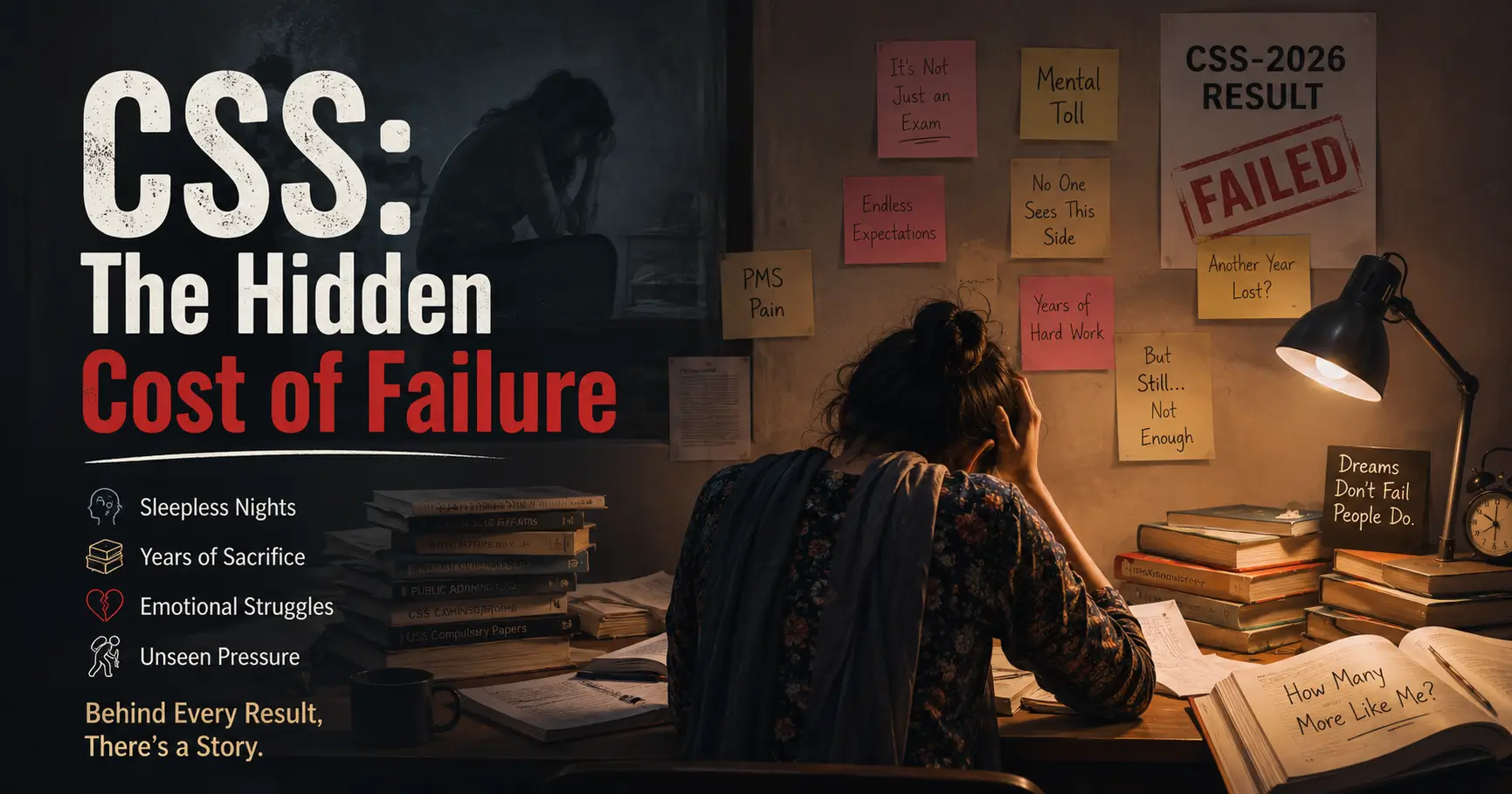
A female CSS aspirant recently described how she faced severe physical discomfort during the nine-day examination. She experienced pre-menstrual symptoms, back pain, exhaustion, and difficulty maintaining focus. Nevertheless, she continued writing every paper because years of preparation had led her to those crucial days.
Similarly, countless candidates face their own hidden battles. Some manage financial difficulties, while others sacrifice social life, employment, sleep, and family time. Moreover, coaching expenses and intense competition add another layer of pressure. CSS: The Hidden Cost of Failure
Yet, when results arrive, society often reduces these years of sacrifice to one word: failure.
When Society Judges Aspirants
Society frequently celebrates successful candidates but rarely understands those who fall short. Consequently, relatives and friends may question an aspirant's intelligence, effort, or commitment without knowing the circumstances behind the result.
Furthermore, the CSS examination itself creates enormous pressure because candidates invest years in preparation for a few hours of assessment. Therefore, a disappointing result can feel devastating, particularly when candidates receive little meaningful feedback about their strengths and weaknesses. CSS: The Hidden Cost of Failure
Important Features of the CSS Challenge
- Years of preparation and sacrifice
- Intense psychological and social pressure
- Physical challenges during examinations
- High coaching and preparation costs
- Limited transparency in assessment
- Unclear reasons behind marks
- Strong family and societal expectations
- Lack of personalized examiner feedback
- Emotional consequences of failure
- Need for a fairer examination system
A Need for Transparency and Reform
The solution does not require abandoning competition. Instead, authorities should make the examination process clearer and more accountable. First, candidates should receive meaningful comments explaining their performance. Second, DMCs should provide useful feedback on both successful and unsuccessful papers. Third, an accessible online grievance system could allow candidates to raise genuine concerns and receive proper responses.
Above all, society must change its definition of failure. A candidate who fails CSS has not necessarily failed in life. Rather, that person may have demonstrated discipline, resilience, knowledge, and courage through years of preparation.
Is There Still Hope?
Yes, there is hope. However, meaningful progress requires both institutional reform and social awareness. Ultimately, CSS should identify capable public servants without destroying the confidence and dignity of those who do not succeed.
Failure should become a lesson—not a lifelong label.
CSS Forum – Join Now