


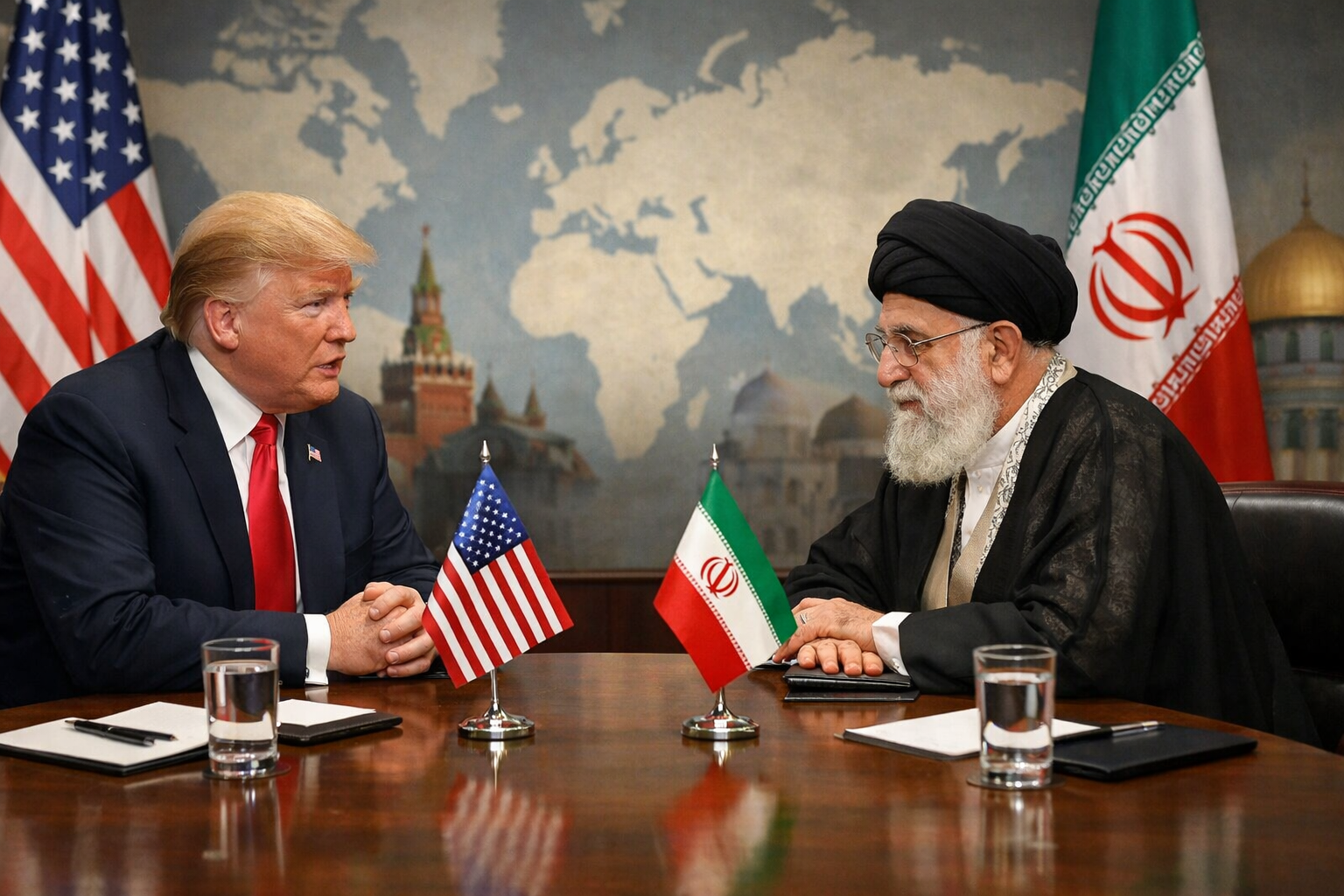
Iran says it will compromise a little bit as it negotiates a new nuclear agreement with the US if the US is willing to lift the sanctions.
Majid Takht-Ravanchi, a Deputy Foreign Minister, said that Iran would be willing to negotiate caps on its nuclear program, including the reduction of its stockpile of highly enriched uranium.
“We are ready to have a conversation about this and other parts of our program if they are ready to handle the sanctions issue,” he told the BBC.
The comments came after indirect negotiations between the US and Iran in Oman earlier this month. Another session will be held on Tuesday in Geneva.
Mr. Takht-Ravanchi stated that the initial conversation was “more or less in a positive direction”; however, he also warned that it was “too early to judge”.
On Saturday, US Secretary of State Marco Rubio said that President Donald Trump would like to make a deal, but it is probably “very hard to do” so with Iran.
Mr. Trump has in the past threatened military strikes if diplomacy fails.
The Iranian official said that “the ball is in the American court to demonstrate that they want to do a deal”.
“If they are really honest,” he said, “I am sure we will be going down the path of an agreement.”
The new talks are a sign of a further attempt to restore diplomatic relations after President Trump pulled out the US in 2018 from the 2015 nuclear deal with Iran, officially called the Joint Comprehensive Plan of Action. This agreement had the effect of easing sanctions in return for Iran agreeing to stringent limitations on its nuclear activities.
Since then, Iran has increased the level of enrichment. The International Atomic Energy Agency (IAEA) reports that the country now possesses more than 400 kg of uranium enriched to 60% purity (which is close to weapons-grade), although Tehran claims that it is not seeking to develop nuclear weapons.
Mr. Takht-Ravanchi mentioned Iran's offer to dilute its 60% enriched uranium as an example of it being flexible.
On the other hand, he asserted that stopping enrichment altogether was not an option. “The thing is that ‘zero enrichment' is not really a thing anymore,” he told the channel. “From Iran's point of view, it's not even discussed. ”
Mr. Trump said on Friday that “we don't want any enrichment” which identified a significant difference in their positions.
When asked if Iran would send its highly enriched uranium abroad just as it did under the 2015 agreement, Mr. Takht-Ravanchi stated that it was “too early to say what will actually happen during negotiations”.
An American delegation, including envoys Steve Witkoff and Jared Kushner, is scheduled to meet Iranian officials in Geneva, with Omani accomplices acting as intermediaries, a source said to Reuters last week.
CSS Forum – Join Now
