


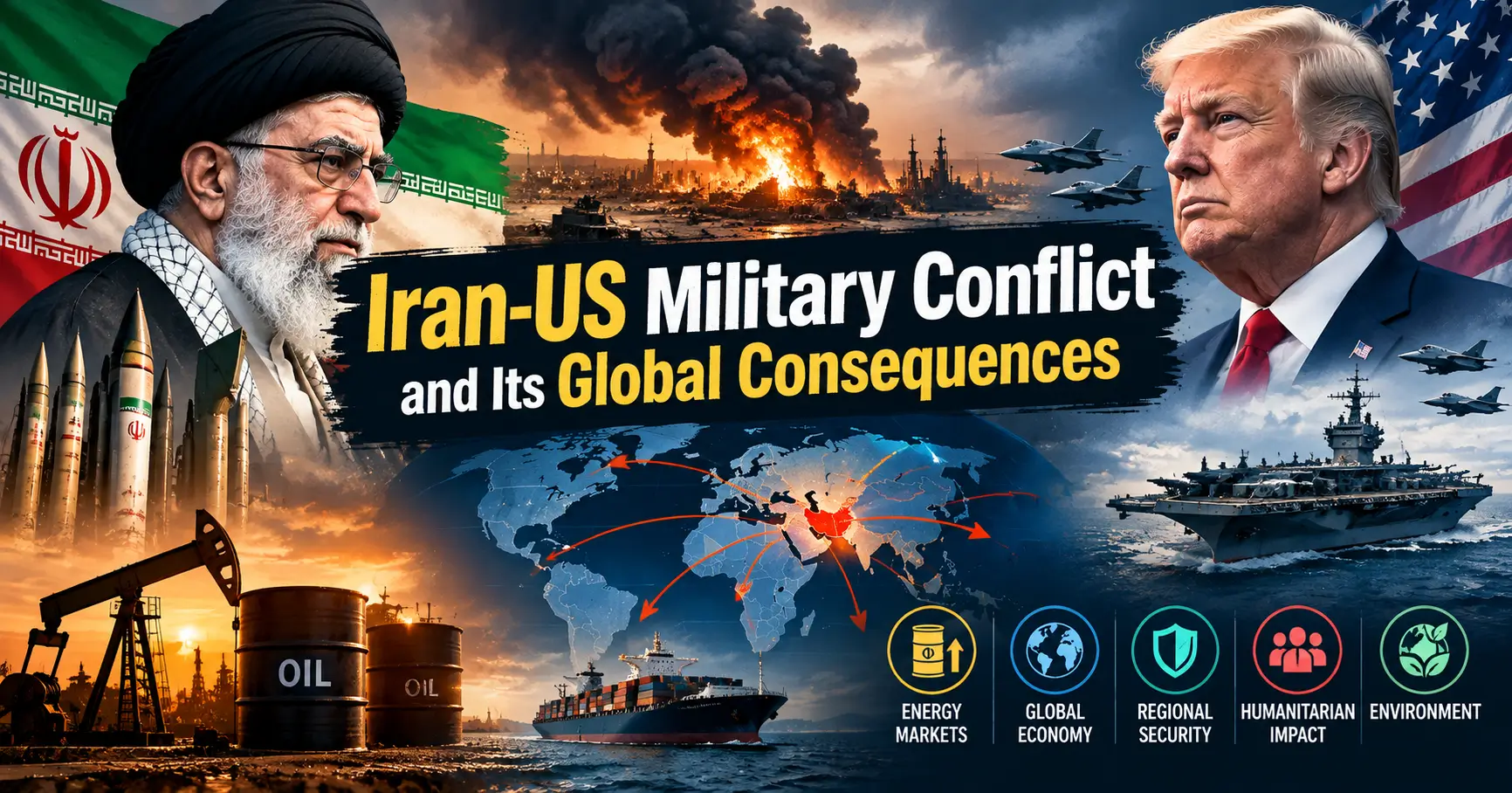
Iran-US Military Conflict and Its Strategic Consequences
Iran-US Military Conflict The growing confrontation between Iran and the United States has raised important questions about American military power and its ability to manage several strategic challenges at the same time. The deployment of carrier groups, aircraft and air-defence systems to the Middle East has placed additional pressure on US military resources in Europe and Asia. At the same time, Iranian attacks on American military facilities have created significant operational and logistical challenges for Washington.
Strikes on US Military Facilities
Iran has targeted several important American military facilities across the Middle East, including radar installations, communication centres, command posts, air-defence systems and logistics hubs. Reported damage to Patriot and THAAD systems, aircraft facilities, warehouses and support infrastructure in Bahrain, Kuwait and Jordan has complicated American military operations and disrupted supply networks.
Iran has also relied on drones and missiles to challenge sophisticated American defence systems. Tehran can launch relatively inexpensive weapons against highly advanced and costly military equipment. The United States must therefore use expensive interceptors and precision weapons to counter repeated attacks. This imbalance can place considerable pressure on American military resources during a prolonged conflict.
Strain on Military Logistics
The conflict has exposed weaknesses in the American logistical system. Longer supply routes from bases such as Djibouti and Diego Garcia can increase the time and resources required to support carrier groups and forward-deployed forces. A reduced number of naval auxiliary vessels adds another challenge to maintaining sustained combat operations.
Global Consequences
Pressure on Europe and Asia
The rapid movement of American naval, air and defence assets toward the Middle East has reduced some US capabilities in Europe and Asia. This situation could affect Washington's ability to respond effectively to simultaneous challenges from Russia and China. It may also influence wider calculations surrounding the war in Ukraine and international security.
Firepower and Weapons Stockpiles
Repeated interceptions of Iranian missiles can place significant pressure on American stocks of air-defence interceptors and precision munitions. Replenishing these weapons may take considerable time. A prolonged conflict could therefore restrict Washington's ability to sustain intensive military operations.
Environmental and Human Security
The conflict also creates serious environmental and humanitarian concerns. Military operations can damage infrastructure, ecosystems and agricultural land while increasing casualties and population displacement. These consequences can continue long after active fighting ends. Iran-US Military Conflict
Important Features
- US military vulnerabilities
- Iran's drone and missile strategy
- Pressure on American logistics
- Depletion of weapons stockpiles
- Impact on Europe and Asia
- Strategic implications for Russia and China
- Diplomatic challenges
- Environmental and humanitarian effects
What to Expect
Neither side appears eager to enter a full-scale ground war. Iran may continue using asymmetric tactics, while Washington may pursue diplomacy alongside economic pressure. Ultimately, military strength, logistics, sanctions and negotiations will shape the future course of the conflict.Iran-US Military Conflict
CSS Forum – Join Now