


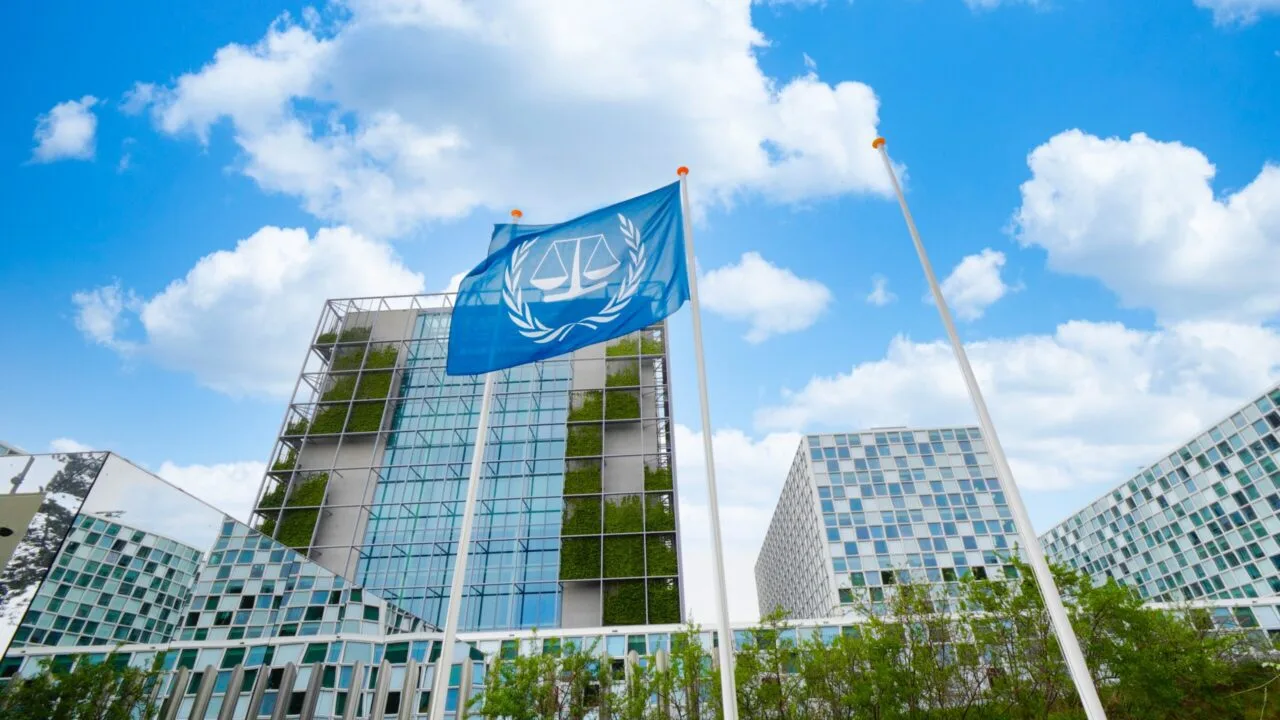
The ICC isn’t a threat to American sovereignty as long as the US military retains its own mechanisms of accountability.
In July, US Secretary of State Marco Rubio announced that the United States would take the International Criminal Court (ICC) apart “brick by brick, if necessary,” and the State Department launched a whole-of-government campaign to “dismantle” its “threat to American sovereignty.” Eleven judges and prosecutors are now under Treasury sanctions, two of them designated for their votes in a ruling. The stated rationale is that the court threatens American sovereignty.
For 25 years, Washington held the more reserved position that the ICC—which tries cases of international crimes of genocide, crimes against humanity, war crimes, and crimes of aggression—cannot lawfully try and sentence American citizens. Nothing the court has done since accounts for this change. What changed is the scope and nature of US military action under the Trump administration.
Since September 2025, the US military has killed more than 200 people in some 60 strikes on vessels in the Caribbean and the eastern Pacific, with almost nothing disclosed about their identities. Asylum-seekers have been returned to the countries they fled or transferred to third-country detention. In January, US forces seized a sitting head of state and brought him to an American courtroom. Add the Iran War and US support for Israel in Gaza, and this administration has generated the largest body of potential international criminal exposure of any in Washington since 2004.
Officials know it. When Politico asked whether colleagues could face prosecution under international law, one answered: “Maybe.” According to the same report, Trump administration officials are concerned that “an unchecked ICC and other international institutions are going to unleash a wave of litigation against this administration and anyone associated with it.” Secretary Rubio warned that the court could target US Marines and Border Patrol agents.
However, the State Department’s campaign is aimed at the wrong target, and the officials running it are undermining their own position.
The United States never signed the ICC’s governing treaty (the Rome Statute). Staying out of the Rome Statute blocks the ICC’s jurisdiction based on nationality. It leaves territorial jurisdiction untouched: the court can adjudicate conduct on the soil of a member state, or aboard a vessel registered in one, and Venezuela, Colombia, and Ecuador are all signatories of the Rome Statute.
American protection from the ICC comes from Article 17 and its complementarity principle. If a state with jurisdiction genuinely investigates or prosecutes crimes the ICC would try, the case is inadmissible. Whether the state in question ratified the treaty is irrelevant.
No power has ever policed its own armed forces as elaborately as the United States—the Uniform Code of Military Justice, the Judge Advocate General’s Corps, Civilian Harm Mitigation and Response Office, inspectors general across the executive branch, and a Justice Department with extraterritorial criminal jurisdiction over US nationals. This system of legal accountability operates on its own and needs no diplomacy, treaty concessions, or cooperation from anyone abroad. It requires only a willingness to convict someone now and then.
Over 18 months, the administration has rapidly dismantled parts of this structure. Defense Secretary Pete Hegseth abolished the civilian-harm assessment units and removed judge advocates general he characterized as impediments to “lethality.” The administration also fired the Pentagon’s inspectors general soon after entering office in January 2025. The Justice Department, led by the president’s former personal attorney, has given no indication it will examine the Caribbean boat strikes. Pre-emptive pardons are also anticipated on a massive scale.
All of this largely complies with domestic law and could count as evidence under the Rome Statute’s Article 17, which examines whether a national process was used to prevent criminal charges. A pardon granted to individuals who were never formally charged already addresses this issue for the United States. The ICC determined in a ruling against Congolese rebel leader Germain Katanga that if a state never conducted any investigation into the crimes committed, the case was admissible based solely on inaction by the Congolese authorities. Thus, the administration’s admittedly minimalist processes will likely ensure that The Hague will not prosecute them. Pardons are effective because the president controls the system that grants them.
Discretion is what protected Americans. ICC prosecutor Karim Khan set aside investigations into alleged US war crimes in Afghanistan in 2021 and went after the Taliban and Islamic State instead. Discretion of that kind responds to institutional incentives. The United States has now sanctioned the judges who authorized the Afghanistan investigation, sanctioned both deputy prosecutors, and set out to dismantle the institution that must shortly elect a new prosecutor following Khan’s removal in July over misconduct allegations. Whoever wins that election will take office knowing that appearing accommodating toward Washington now carries a professional cost within the court’s own membership. It is difficult to design a more efficient way to convert a cautious prosecutorial culture into an adversarial one.
Washington has gone after the court’s capacity. What protected Americans was its restraint, and restraint is the first thing an institution gives up once it decides it has nothing left to lose.
The wider damage runs through instruments Washington values more than the ICC. Executive Order 14203 sanctions the property of the judges seated in The Hague, creating an immediate problem for the Netherlands. Amsterdam is obliged to maintain the court’s operational continuity. Dutch banks sought guarantees before continuing to process the court’s transactions; the Dutch justice minister observed that his country was “too small” to protect them on its own. The ICC’s president has called the EU blocking statute, which protects the ICC from sanctions, “essential” to the court’s survival, the European Parliament has urged its activation twice, and Spain formally requested it in May.
As a result, European finance ministries are now discussing a payments channel insulated from US jurisdiction—and Washington has handed them the most sympathetic test case possible—not a sanctioned oligarch’s assets or a rogue bank, but judges’ salaries. The extraterritorial reach of the dollar rests on the same foundation as every other American legal asset: the expectation of other governments that US rules will be applied the same way tomorrow as today. Each use of that reach against a target allies consider legitimate adds a line to the business case for building alternatives.
The other cost is operational. Every NATO member except the United States has signed the Rome Statute, which means allied officers carry a legal exposure that Americans do not. Before a Dutch or Canadian officer joins a targeting cell, a military lawyer signs off. Part of what that lawyer relies on is that the Americans in the room investigate themselves—there is a JAG, there is a civilian-harm cell, there is a process. Take those away, and the lawyer has nothing to point to. Nobody will announce a change. Approvals will take longer, caveats will multiply, and allied officers will end up a little further from the room where the decision gets made.
The reality is that nobody is likely to be prosecuted soon. No American is currently in custody. The court cannot try anyone in absentia, and roughly 100 states signed agreements after 2002 promising never to hand over a US national. Venezuela’s withdrawal, notified on July 24, takes effect in a year, and conduct during its membership remains enforceable.
The strongest defense the United States has against the ICC is a working system of domestic accountability, something Washington can build without asking anyone, and that no foreign government can take away. Restoring the civilian-harm assessment cells, the judge advocates, and the inspectors general would cost little and would rebuild a complementarity defense no prosecutor could get past. Admissibility challenges and the Article 98 network remain lawful and available, and they have worked for two decades. Sanctions on judges do neither of those things.
What the administration is trading away has survived changes of government because it was built into institutions rather than personnel. What it is trading for—pardons, designations, a campaign run out of the State Department—expires with the people who arranged it.
About the Author: Eric Alter
Eric Alter is the dean of the Anwar Gargash Diplomatic Academy in Abu Dhabi and a professor of international law and diplomacy, as well as a member of the Council on Foreign Relations. A former United Nations civil servant and a senior consultant/team leader with various international organizations, including the WTO, the World Bank, IFC, UNDP, UNEP, and FAO. Professor Alter has been seconded abroad and has worked with embassies in an advisory capacity, particularly in Aden, Beirut, and Cairo. He received his PhD from Paris I Pantheon-Sorbonne.
SOURCE:https://nationalinterest.org/feature/the-trump-administrations-mistaken-war-on-the-icc
CSS Forum – Join Now