


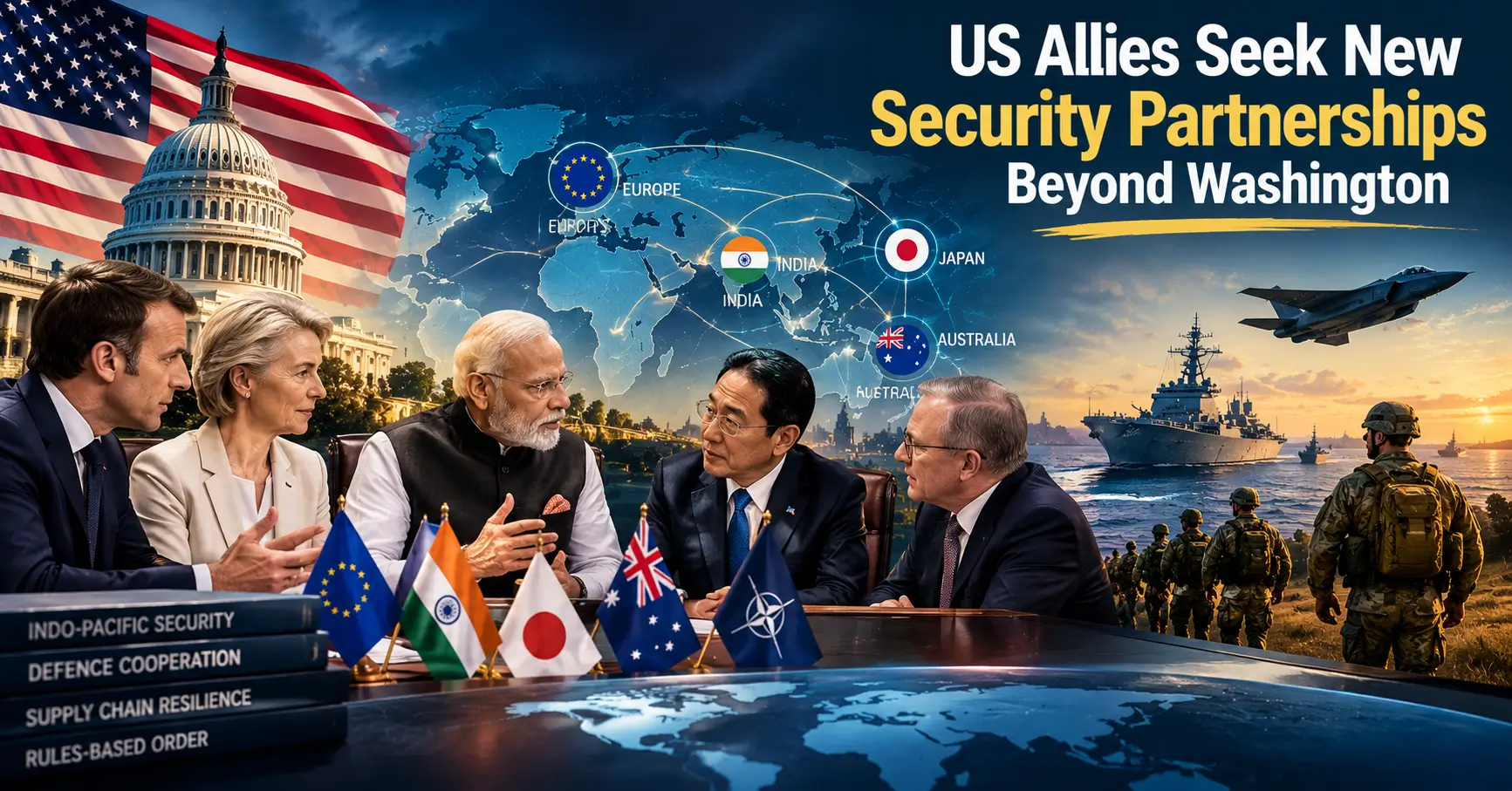
US Allies Seek Greater Security Choices
For decades, the United States has held a central position in global security. Its military strength, intelligence networks, advanced weapons, and extensive alliance system gave Washington considerable influence over its partners. Today, however, many US allies are looking beyond a single security provider. They are not abandoning Washington, but they are developing additional defense relationships that give them greater strategic freedom.
Governments increasingly want access to multiple sources of military assistance, weapons, intelligence, financial support, and deterrence. This approach can reduce their dependence on Washington and give them more flexibility when national interests do not fully match US priorities.
A New Era of Defense Partnerships
The growing cooperation between Saudi Arabia, Pakistan, and Turkey illustrates this changing security environment. Their defense partnership combines three countries with different but complementary strengths. Saudi Arabia brings financial resources and strategic geography. Turkey contributes substantial conventional military capabilities and an expanding defense industry. Pakistan adds significant military experience and a nuclear capability.
Key Features of the Emerging Security System
- Multiple security partners: Countries increasingly maintain relationships with several defense providers.
- Greater strategic autonomy: Governments can reduce their dependence on one major power.
- Expanded military cooperation: Defense partnerships can improve training, coordination, and interoperability.
- Stronger domestic industries: Countries continue investing in their own weapons and defense sectors.
- Alternative arms suppliers: Governments can obtain military equipment from different international sources.
- Regional deterrence: Overlapping partnerships can discourage potential aggressors.
- Diplomatic flexibility: Multiple relationships give governments greater bargaining power.
Europe Is Adopting a Similar Strategy
European countries also increasingly combine NATO membership with bilateral and regional defense arrangements. Poland, for example, has strengthened its military relationships with countries such as Britain and France while maintaining its NATO commitment.
These partnerships do not necessarily challenge NATO. Instead, they provide additional options during a crisis and allow individual states to respond more independently.
What the Shift Means for Washington
Greater allied self-reliance creates both opportunities and challenges for the United States. Stronger partners can share more responsibility for regional security and reduce pressure on American forces. However, Washington may lose some leverage when allies no longer depend exclusively on US support.
The United States must therefore compete through reliable diplomacy, military cooperation, strategic engagement, and persuasion. American alliances remain important, but partners increasingly want alternatives.
This emerging security landscape points toward a more diversified international system. Countries can maintain strong ties with Washington while simultaneously building relationships elsewhere, creating greater strategic independence in an increasingly competitive world.
CSS Forum – Join Now