

Why ‘Mowing the Lawn’ Isn’t a Winning Strategy for the Iran War By Erik Gartzke
Why ‘Mowing the Lawn’ Isn’t a Winning Strategy for the Iran War By Erik Gartzke The latest round of Iran sanctions will be anything but an “economic D-Day” for Tehran.
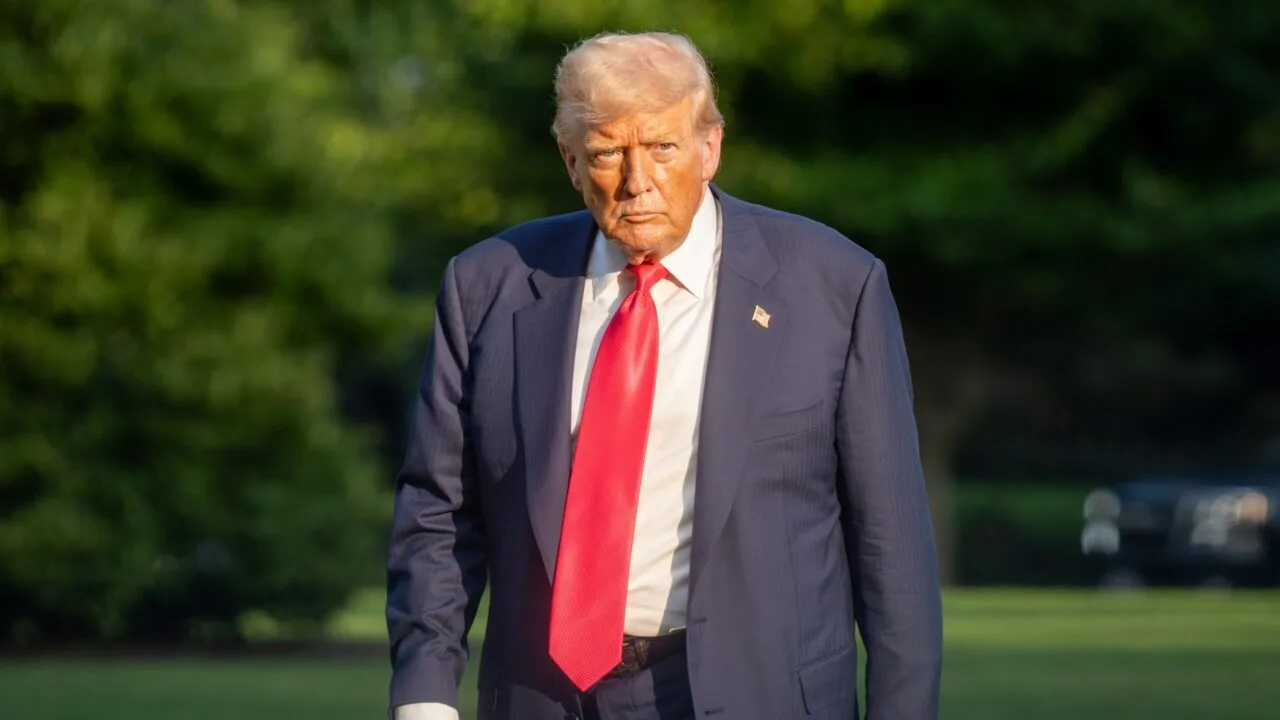
President Donald Trump recently announced an “economic D-Day” in the war against Iran. The markets took this as bad news. Having had little success in defeating the Iranians militarily, officials in Washington now hope to win by increasingly “weaponizing” the international economy.
But widening a war is not the same as winning one. Indeed, this new strategy simply plays into Western structural weaknesses. The United States does not care about victory over Iran as much as Tehran cares about avoiding defeat, which they equate to regime survival.
War is a contest. Resistance need not be futile (pushing back against the Borg from the Star Trek franchise). One can win either by defeating an adversary in battle or by convincing the enemy that defeat is inevitable. The latter approach—which includes strategies like terrorism, insurgency, and wars of attrition—is not pretty. Still, it is the comparative advantage of those with less military might but greater resolve.
As recent US experience demonstrates, even the world’s most capable military can lose a war now and then. Polling data has shown that the US public broadly disapproves of Trump’s aggression against Iran. Leaders in Tehran can read the polls, too. So, they have chosen to go after American resolve, rather than confronting US capabilities.
Each side in a war seeks to manipulate the way war is fought. Neither side benefits by fighting the way the adversary prefers. After the first few days of US bombing in the current contest—when Iran lost much of its air force and navy—the Iranians managed to convert the war into an attrition fight, a contest of wills that favors Iran.
Hence Washington’s new economic strategy. But a change in strategy also reveals a loss of confidence in the way America was fighting previously. The shift in strategy is at least a tacit admission that the previous strategy was misguided. Plan B (or C, or whichever one we’re on) may be an improvement, but there is no guarantee.
Worse, there is every reason to believe that economic warfare will be at least as ineffective against Iran as the military front. Whether the “weapons” involved are military or economic, the underlying effort remains a test of wills, meaning the United States remains at a disadvantage.
Convincing an enemy to submit requires two things.First, what you are doing must hurt.
Second, they must care more about the pain than the issues at stake.
The difficulty with economic campaigns against Iran at this point is that Tehran has already endured decades of economic sanctions. The economy is moribund, as President Trump himself noted. Why, then, imagine that there is leverage in breaking what is already broken?
This leads to the second criterion. The main victim of US economic warfare will inevitably be the Iranian population. As the regime has already demonstrated, it does not take much stock in the welfare of its own people. Removing cash from the pockets of Iranians will not cause Iran’s leaders, or the Islamic Revolutionary Guard Corps, to cave to US demands.
So what will work? Regrettably, nothing. The best response to an ill-conceived conflict is not to initiate it in the first place. Recent US experiences in the region should have led any leader to think twice before launching yet another ill-conceived war. Trump, in particular, disavowed military aggression on the campaign trail (“I’m not going to start a war”).
The difficulty now is extricating America from this profound, and avoidable, foreign policy blunder. However, the consequences of wars are not easily undone. Tehran has achieved an effective veto over the Strait of Hormuz and its nuclear ambitions are likely increased.
The war has been progressing in fits and starts, reflecting US military dominance but also the political intractability of the contest. This will continue, perhaps for the next two years. Trump has no talent for acknowledging his mistakes. He has been searching for a pretext that would allow him to claim victory, but none seems likely, or destined, to emerge.
Israel’s solution to implacable, if weaker, adversaries is known colloquially as “mowing the lawn.” Rather than seek elusive decisions on the battlefield, Israel prefers to use its military superiority to degrade an enemy’s capabilities through brief, sharp attacks, expecting to repeat the process periodically in the future.
It now seems likely that the United States has backed itself into the equivalent of “mowing the lawn” with Iran. Trump’s claim last summer that he “obliterated” Iran’s nuclear facilities—only apparently to be forced to obliterate them all over again, this year—may presage a new normal for US foreign policy. If not actually invading a targeted Middle Eastern country, conflicts will simmer, occasionally boiling over in the forms of air strikes and missile exchanges.
As has happened too many times in the recent past, America’s focus on its most pressing foreign policy problem (read China) has again been displaced by the bouncing balls of seemingly urgent crises elsewhere. One wonders whether a foreign policy of restraint is even achievable in Washington without the will, and not just words, for peace.
About the Author: Erik Gartzke
Erik Gartzke is a non-resident fellow at Defense Priorities and a professor of political science and director of the Center for Peace and Security Studies at the University of California at San Diego. He previously taught at Columbia University (2000–2007) and Pennsylvania State University (1997–2000). Gartzke’s research focuses on deterrence, nuclear security, and the evolving technological nature of interstate conflict. His research has appeared in the American Political Science Review, the American Journal of Political Science, International Studies Quarterly, Security Studies, World Politics, and elsewhere. His latest book manuscript, with Jon Lindsay, Elements of Deterrence: Strategy, Technology, and Complexity in Global Politics, was published by Oxford University Press in 2024.
SOURCE:https://nationalinterest.org/blog/middle-east-watch/why-mowing-the-lawn-isnt-a-winning-strategy-for-the-iran-war
CSS Forum – Join Now