


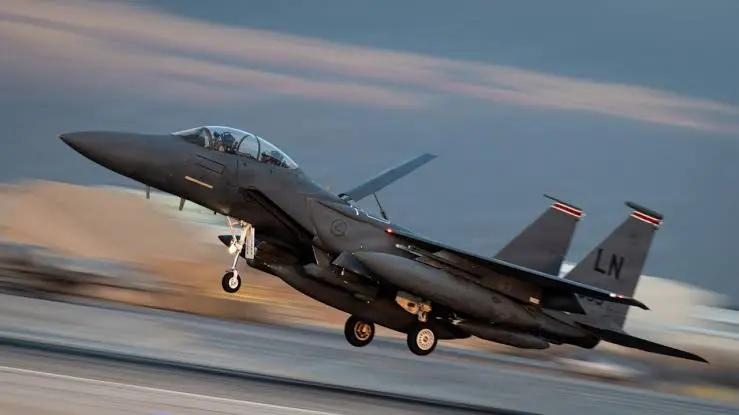
US withdrawal from the bases in the Gulf states would only solidify Iran’s control over a critical international waterway.
Since the outbreak of the Iran War in late February, Iran and its proxies have targeted US military bases across the Middle East and in the Gulf states in particular. This has re-ignited debates in Washington about the strategic utility of the bases, with some analysts calling for complete withdrawal. Even the Pentagon is reviewing how to reduce and reposition forces for safety. While the problem is real, the proposed solution carries enormous negative strategic consequences and would deliver a major win for Iran. And none of the damage would solve the problem.
Major repositioning of US military forces out of the Persian Gulf region would give Iran a massive, unprecedented strategic victory, strengthen its ability to dominate Iraq, increase its pressure on Arab states of the Gulf Cooperation Council (GCC), and damage US credibility worldwide.
US Withdrawal Would Be an Iranian Strategic Victory
First, a major withdrawal of forces from the Gulf would be a strategic victory for Iran. Iran has viewed the US military presence in the Gulf as illegitimate since the Iranian Revolution in 1979. Iran repeatedly calls for the withdrawal of US forces from the region. Iran would trumpet a major US pullback of forces as the success of a 45-year pressure campaign. Iran’s friends and foes in the Middle East would share this view of a US defeat.
Consequences would not be limited to GCC states. Iraq is the scene of an influence struggle between the United States and Iran. Helping the Iraqi government stand up to the powerful Iran-backed militias will become even more difficult in the context of a failure of US political will. It would exacerbate the impact of a US military withdrawal from Iraq by September 30. This would leave the militias not only freer to target the GCC states and US interests but would also greatly expand Iranian influence within Iraq.
Arab Gulf States are already reeling from finding that the bases have attracted the very threats and attacks they were thought to prevent. Pulling out forces now would be essentially running out of the Gulf and leaving behind our friends who are geographically unable to move. Iran is their neighbor, whether they like it or not. For those who look, a US withdrawal would be a dramatic illustration of why one could not count on the United States. It would significantly strengthen the apparent lesson of the withdrawal from Afghanistan—neither Biden’s nor Trump’s America will stand under pressure.
Another long-term consequence would be greater Iranian sway inside the GCC states. Those governments would be under heightened pressure to negotiate a modus vivendi with Iran. In an extreme case, Iran could pressure Bahrain and the UAE to reduce, if not sever, their formal relationships with Israel. Efforts to expand the Abraham Accords would clearly be set back. The Iranian regime could once again publicize and possibly act upon revanchist claims on Arab territory on the other side of the Gulf.
Why Are the Gulf States Important to the US?
The United States has a deep web of connecting interests in the Gulf, including oil, investments, and involvement in worldwide security issues. Oil is a part of the answer. Between 20 and 30 percent of the world’s oil travels through the Gulf, with most of it being exported through the Strait of Hormuz. Because oil is priced based on international supply, when the price rises internationally, it rises in the United States, despite our domestic supply.
But oil is not America’s only interest in the Gulf. The six Gulf countries’ 11 sovereign wealth funds have invested about $2 trillion in the US economy, particularly in cutting-edge industry sectors like artificial intelligence and data centers. One estimate puts US foreign direct investment in the GCC states at around $70 billion since 2020. How much of these massive, two-way investments would be affected by perceptions of Iranian strategic progress is hard to say, but it cannot be ignored. Iran specifically targeted some landmark American private sector investments in the GCC countries during the rounds of hostilities.
The six GCC states are essentially Western-oriented, with moderate political stances on many issues where US leadership matters. They have stood with America in repeated crises. The basing of US forces in the Gulf was critical to the 1988 Tanker War with Iran, the 1991 liberation of Kuwait, the response to the devastating Al Qaeda attacks on the United States on 9/11, and the 20 years of war that followed. Combat forces from several GCC states served with Americans in Afghanistan, Iraq, and even in the Kosovo campaign.
Until about 10 years ago, the GCC states looked almost exclusively to the United States for political leadership. Since then, some GCC governments have advanced their engagement with other powers, including rivals of the United States. But Washington remains the preferred partner for Gulf governments on military, security, and intelligence, as well as in multilateral fora, trade, investment, and innovation.
The United Arab Emirates, Bahrain, and Morocco joined the Abraham Accords and normalized relations with Israel for their own strategic reasons. Still, a driving factor was also their expectation that becoming an Abraham Accords partner would solidify their relations with Washington. America’s power of persuasion would be reduced if we redeployed military forces.
Repositioning Will Have Costs but Provide No Security
Beyond the military and security consequences of a major withdrawal, repositioning would also carry major financial costs and only limited security gains. Gulf states paid for the construction of many American facilities and bases, and many also cover a sizeable share of their annual operating costs. They did so in their own interests but are unlikely to pay the billions of dollars required to reposition the planes, ships, command posts, and other facilities involved.
And how will repositioning solve the security problem? Simply moving to the other side of the Arabian Peninsula brings them closer to Houthi missiles without being out of range of Iran. In the era of drones and missiles, there are few places to hide, as Iranian attacks on Israel, Jordan, and even Cyprus have illustrated. The further forces are positioned away from the Gulf, the greater the response-time problem will be. Moving to the United States or Europe would be both a clear confession of strategic retreat and a positioning of forces too far away for rapid response to the Gulf.
There is also the command-and-control problem for forces in the area. The role of the Central Command (CENTCOM) forward headquarters in Qatar, and particularly the 5th Fleet headquarters in Bahrain, is critical. Americans cannot realistically fight a war in the Gulf only from CENTCOM headquarters in Tampa. The long-term effects of operating at sea with a regional resupply facility are already apparent in the travails of the USS Abraham Lincoln aircraft carrier, which is only now departing the Persian Gulf after nine months at sea.
The negative military, economic, and strategic effects of a major force withdrawal from the Gulf are overwhelming even before one considers broader, worldwide strategic implications. If the result of the US starting a war of choice is that it has to reduce a 50-year military presence to protect itself from Iran, the United States will definitely be the loser now and into the future. No amount of PR spin will cover up that level of strategic defeat. It would be seen and felt in US relationships and credibility worldwide.
What Is to Be Done?
If staying in our current force posture is dangerous and running away is disastrous, what is to be done? First, examine options to mitigate risk. This includes reducing the number deployed, hardening bases (in consultation with the hosts who may assist financially), and reviewing whether non-combat support services can be moved to Europe or the Middle East.
There is clearly work to be done on air defense, including lower-cost anti-drone measures. This is a global problem, and staying in the Gulf will enhance our ability to work technically and financially with allies. The Gulf states will remain vulnerable to Iran no matter what we do. Staying provides an enhanced opportunity for cooperation, not only on the technical aspects of defense but on improvements in unified regional defense.
Coordinated and unified air and missile defense among the GCC states has been a decades-long American effort in the region. Advances have depended on the US playing a central role in coordination but have been limited by mutual frictions and distrust among GCC states. The current fighting, with Iranian strikes on every GCC state from Kuwait to Oman, has dramatically illustrated the need for the GCC states to work together and with us. This is a situation we should use to work cooperatively with our GCC friends, not one in which we should bolt for the door.
About the Author: Ronald Neumann
Ronald E Neumann is the president of the American Academy of Diplomacy. Formerly, he served as the deputy assistant secretary of state in the Bureau of Near East Affairs with responsibility for North Africa and the Arabian Peninsula. He served three times as ambassador: to Algeria, Bahrain, and Afghanistan. In addition, he served in US diplomatic missions in the UAE, Iran, Iraq, Yemen, and Jordan.
SOURCE:https://nationalinterest.org/blog/middle-east-watch/why-the-us-military-should-stay-in-the-gulf-states
CSS Forum – Join Now